On the evening of August 26, 2026, the Tsinghua Hephaestus Team, advised by Zhao Mingguo, a research fellow in the Department of Automation at Tsinghua University, defeated Italy’s SPQR Team 10–1 in the Large-Size Humanoid 5v5 Football Competition at the second World Humanoid Robot Games, successfully defending its championship title. Earlier this year, the team had already won the Large-Size Humanoid League championships at the RoboCup China competition in May and the international RoboCup competition in July. With this latest victory, the team secured three major competitions the year!
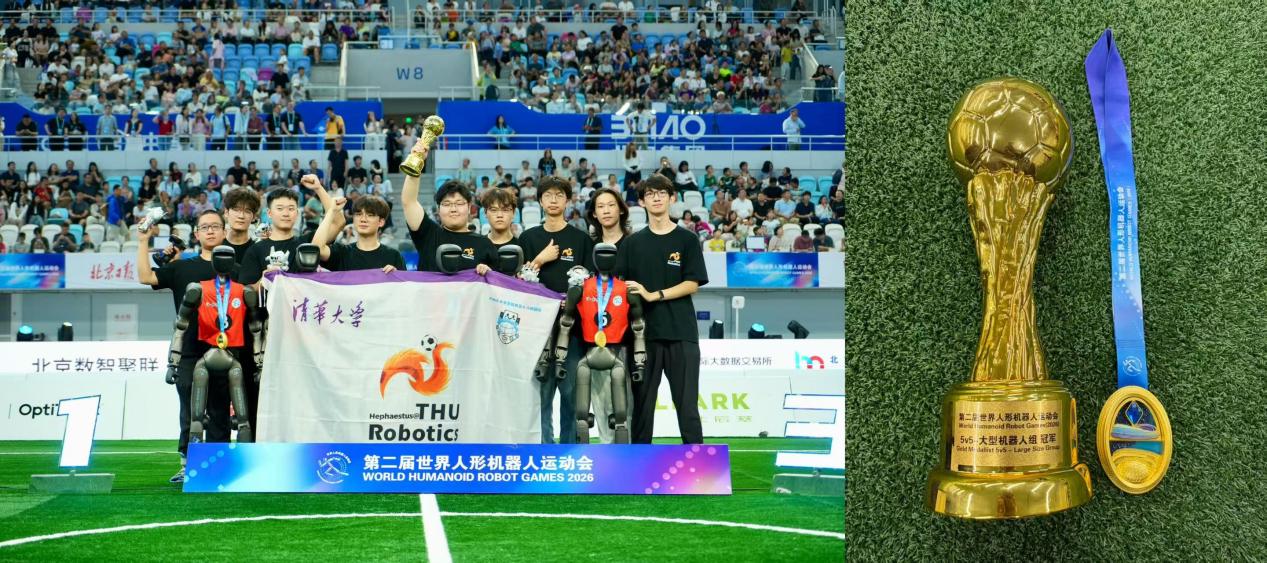
Award ceremony and trophy for the Large-Size Humanoid 5v5 competition at the World Humanoid Robot Games
This year’s Large-Size Humanoid 5v5 competition introduced the new Booster T2 humanoid robot. Having only recently completed the transition from the previous robot platform following the international RoboCup competition, the Hephaestus Team faced multiple challenges: transferring its technologies to the new platform within a short period of time, fully harnessing the capabilities of the new robot, and testing and validating new technologies on the new platform. With only three weeks to prepare, the team tackled these challenges one by one.
The Hephaestus Team advanced from the preliminary stage with four consecutive victories. In the knockout rounds, it defeated the Malaysia’s team 14–1 and China Agricultural University’s Qinghe Team 7–1 to reach the final, where it defeated Italy’s SPQR Team 10-1 to claim the championship.
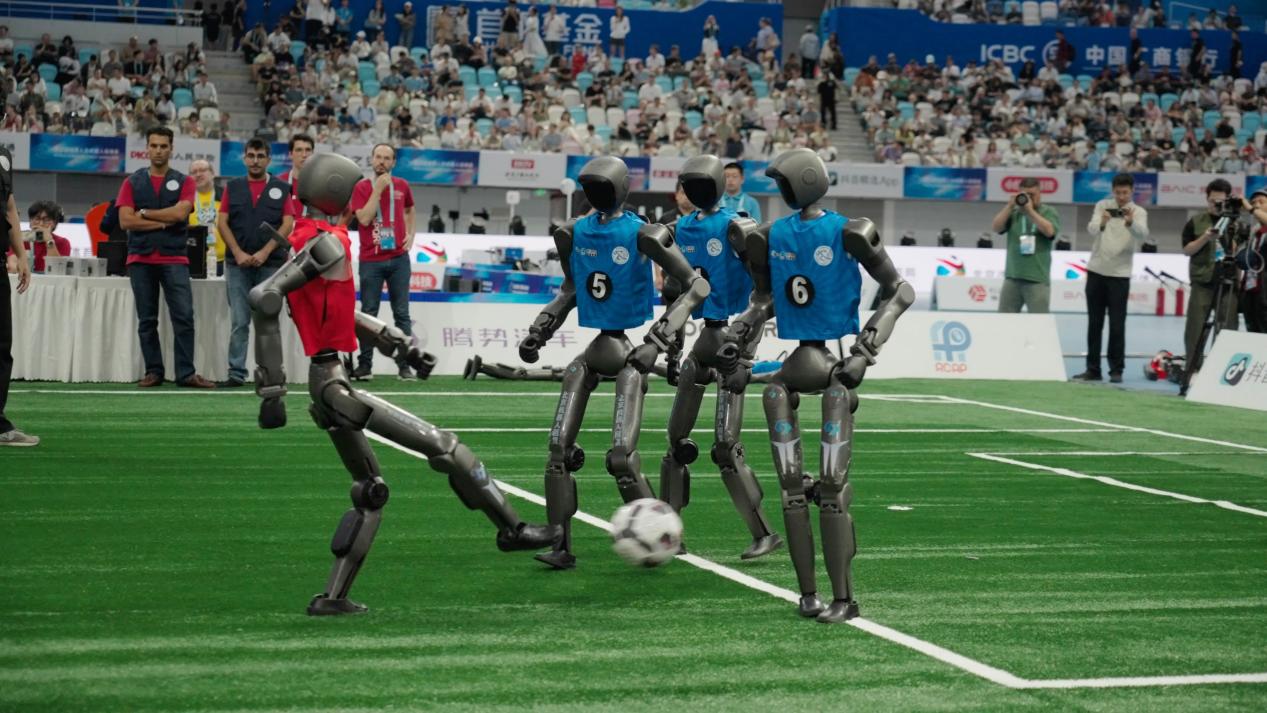
The Tsinghua Hephaestus Team’s robot takes a shot in the final while being blocked by multiple opposing players.
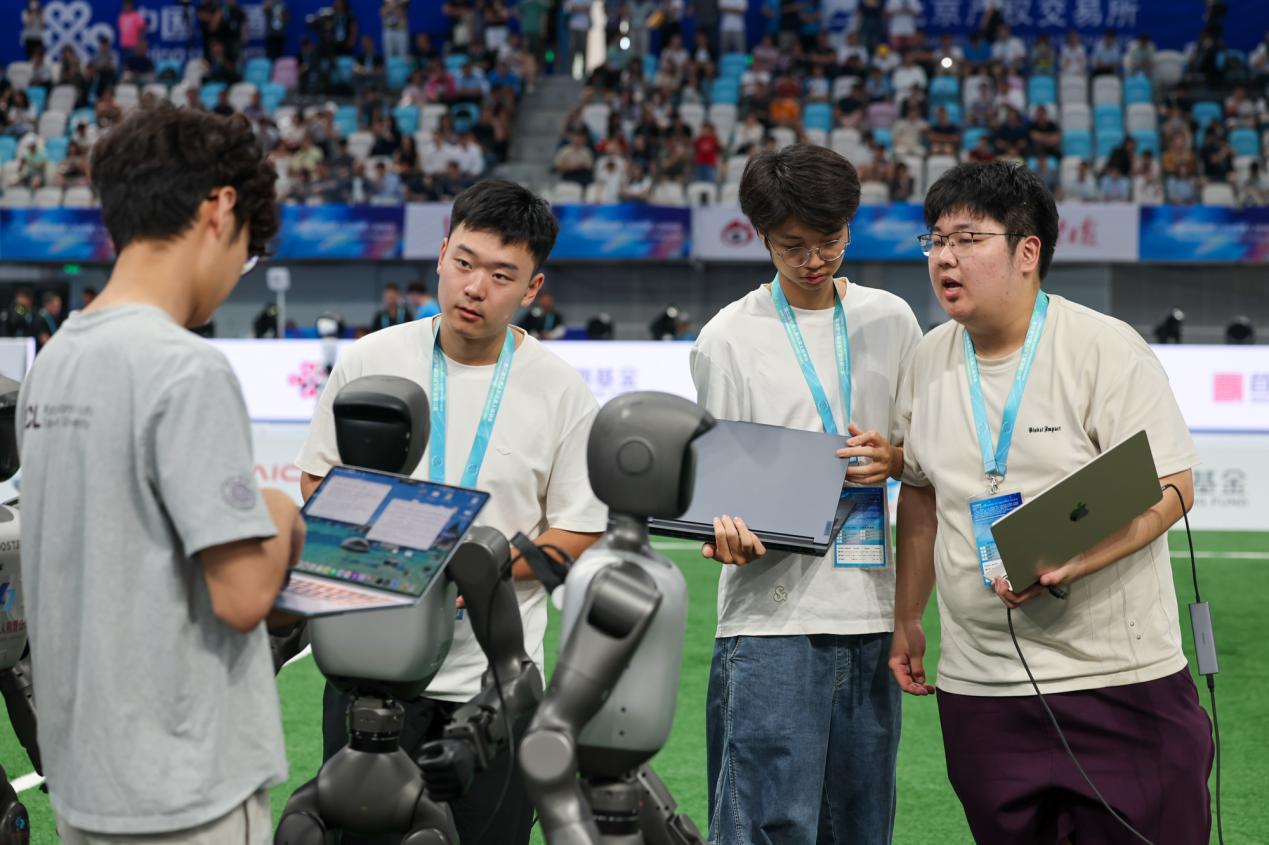
Members of the Tsinghua Hephaestus Team conduct pre-match debugging.
In last year’s competition, the Hephaestus Team used its independently developed reactive kicking skill learning method to enable the Booster T1 humanoid robot to achieve fluid movements and efficient shooting, helping the team secure the championship. On August 19, 2026, the related research was published online in Science Robotics.
This year, the team continued to refine its algorithms. The robots are now capable not only of agile shooting but also of executing short-range passing combinations, progressively advancing the ball into the opponent’s goal area and reliably finishing with shots on goal.
By winning a series of major competitions, the Tsinghua Hephaestus Team has continued to test and refine its technologies and accumulate practical experience through competition, helping drive further advances in embodied intelligence for humanoid robots.