A Tsinghua-led research expedition has discovered a large, active high-temperature hydrothermal field in the western Pacific, with preliminary findings suggesting substantial potential for polymetallic sulfide resources.
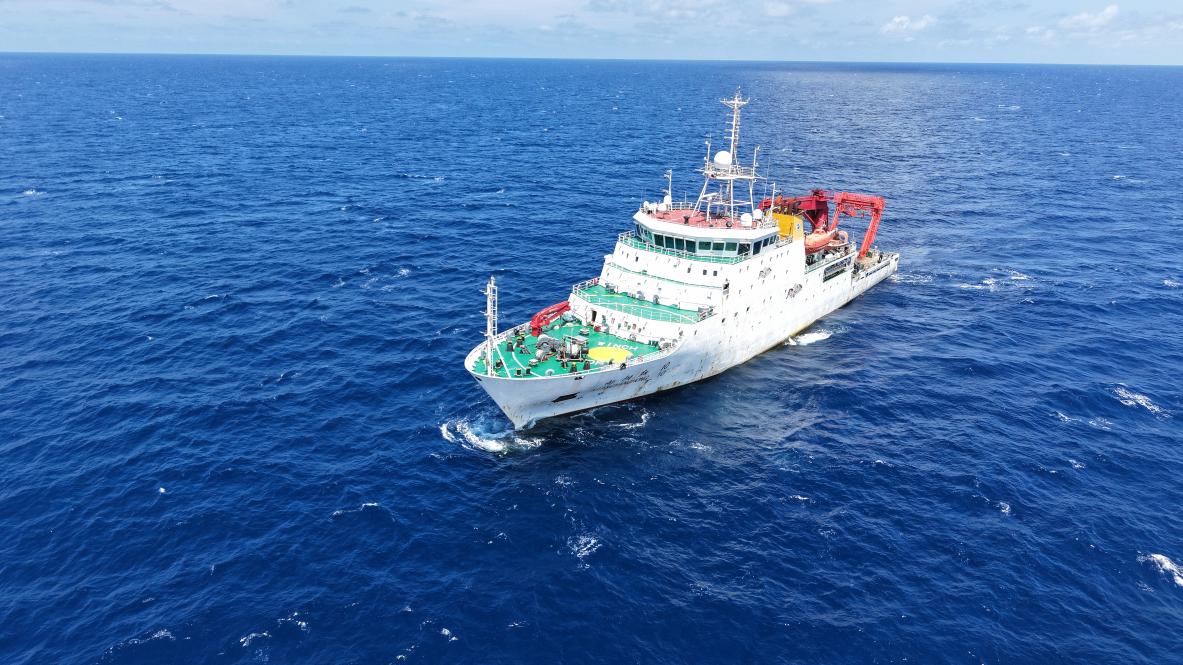
The joint expedition brought together researchers from Tsinghua University, the Qingdao Institute of Marine Geology of the China Geological Survey, Shanghai Jiao Tong University and other institutions. Using underwater equipment developed by the participating teams, the researchers located mineral deposits, collected samples and observed biological communities around deep-sea hydrothermal vents.
Departing from Shenzhen aboard the research vessel Xiangyanghong 10 , the team conducted seven survey dives in a western Pacific back-arc basin during the 18-day expedition.
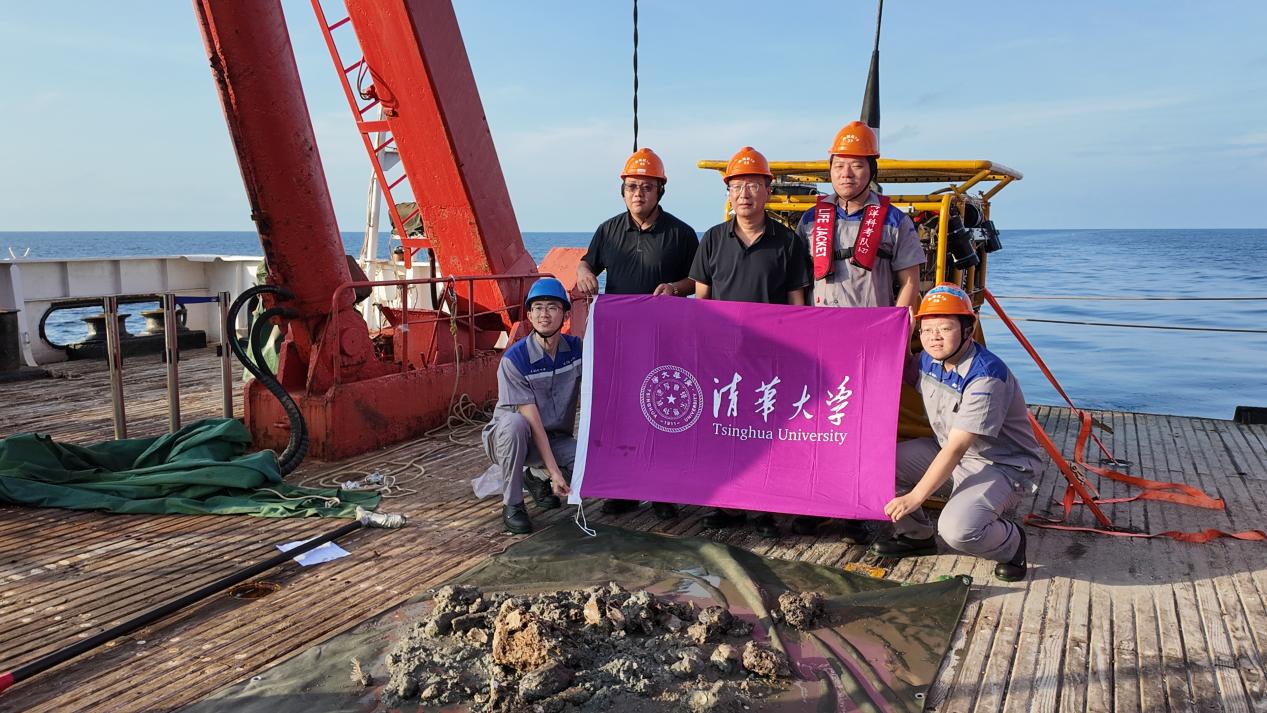
Song Shiji (center) with members of the expedition team
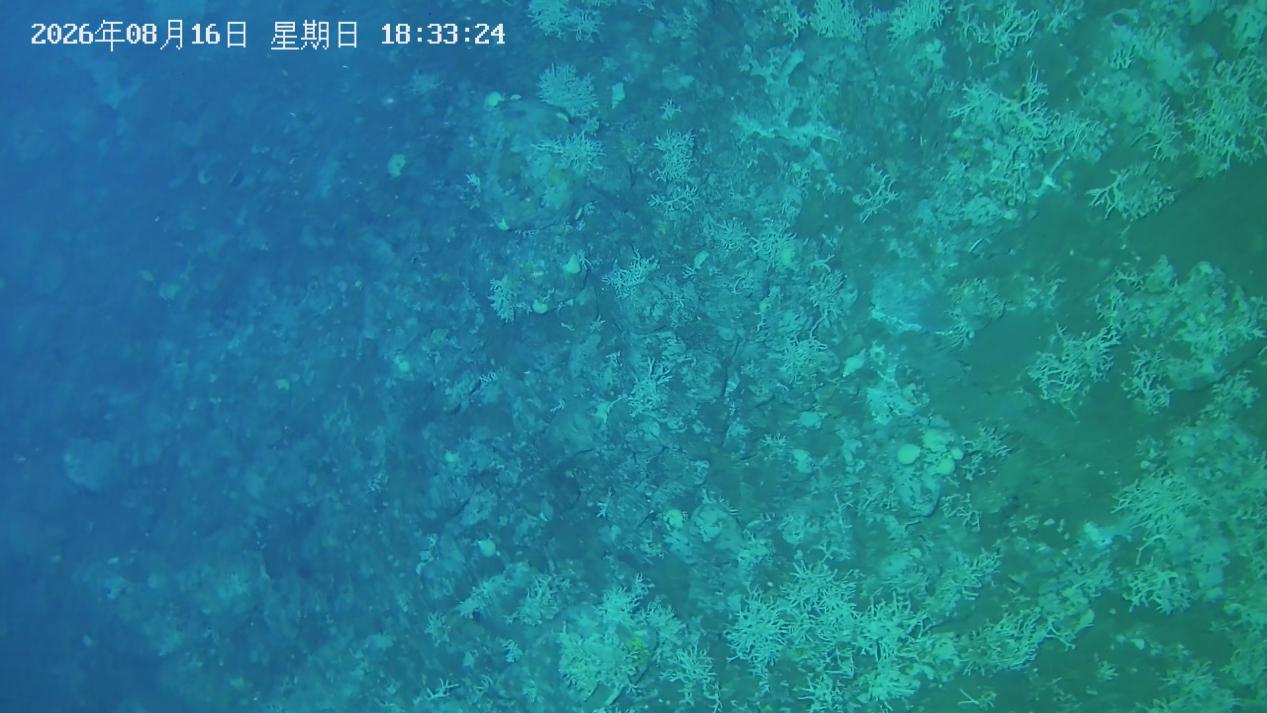
A view of the seafloor captured during a probe dive on August 16, 2026
Mineral deposits and life in an extreme environment
The newly identified hydrothermal field contains three large, cone-shaped sulfide bodies. Preliminary analyses in the shipboard laboratory indicated that the samples were primarily composed of chalcopyrite, pyrite and sphalerite—minerals containing copper, iron and zinc.
According to Professor Song Shiji of Tsinghua’s Department of Automation, who led the expedition project, initial analyses of selected samples revealed gold concentrations of up to 15.4 parts per million and silver concentrations of up to 1,271 parts per million. These values are equivalent to 15.4 grams of gold and 1,271 grams of silver per metric tonne of ore, respectively.
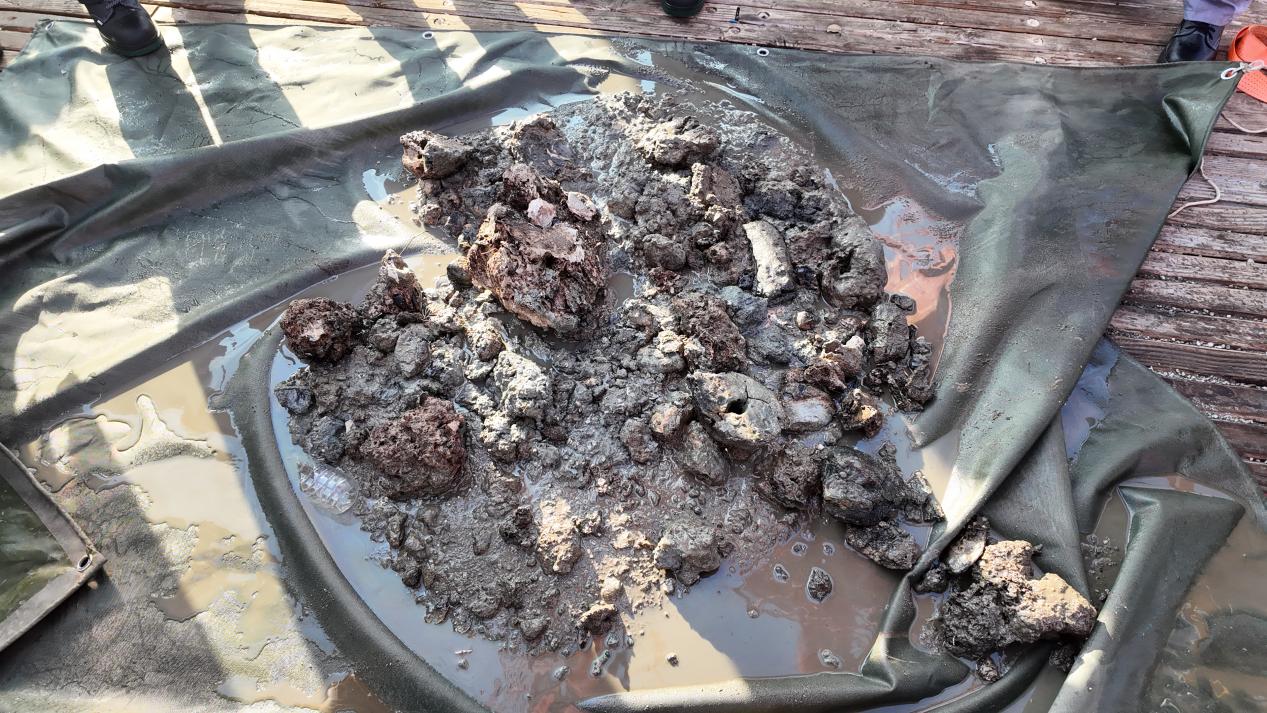
A sample from a hydrothermal sulfide deposit collected by the sampler
The findings provide preliminary evidence of the field’s resource potential. Further investigation is needed to determine the extent, composition and total metal content of the deposits.
In addition to these mineral findings, the team observed rich biological communities within the hydrothermal field. Deep-sea vents are among Earth’s most extreme habitats: sunlight is absent, pressure is immense, and organisms must cope with steep temperature gradients and potentially toxic chemicals.
Yet these environments support distinctive ecosystems sustained by chemical energy rather than sunlight. Song noted that studying these communities could provide valuable insights into how life adapts to extreme conditions and evolves within them.
Underwater robots collaborate on seabed surveys and sampling The discoveries were enabled by a new deep-sea robotic exploration system developed under Tsinghua’s leadership in collaboration with from Shanghai Jiao Tong University and other partners.
The system integrates an autonomous underwater vehicle (AUV) and a deep-sea controllable visual sampler (DCVS). The two platforms serve complementary functions: the AUV surveys the seabed and identifies promising targets, while the DCVS conducts close-up inspections and collects samples at selected sites.
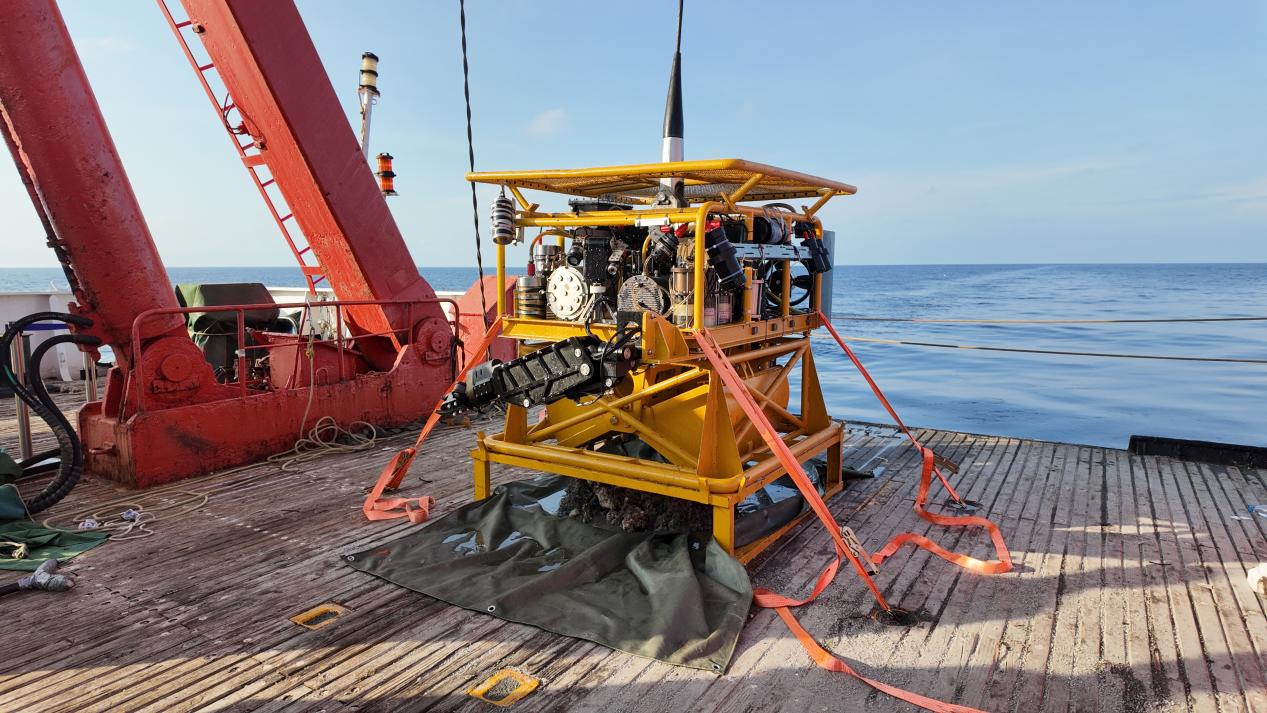
The deep-sea controllable visual sampler (DCVS)
The AUV is equipped with a multibeam echosounder, side-scan sonar, and an integrated acoustic and optical imaging system, along with acoustic communication and ultra-short baseline (USBL) positioning systems. Together, these capabilities support seabed mapping and target detection and enable researchers aboard the support vessel to monitor underwater operations.
The DCVS comprises a seabed robotic unit, a shipboard power system, and a surface monitoring system. It integrates high-definition cameras, physical and chemical sensors, intelligent recognition and control capabilities, and a grab-sampling mechanism. The system can autonomously search for hydrothermal vents, locate sampling targets precisely, and collect seabed rocks and biological specimens, with a sampling capacity of several hundred kilograms per deployment.Operating this equipment safely poses significant challenges. The survey area features complex terrain, including trenches, seamounts and steep cliffs, alongside variable oceanographic conditions. The DCVS’s high-voltage tether must be kept clear of seabed obstacles to prevent collisions and entanglement.
The team’s intelligent recognition and control system enabled the sampler to operate under these challenging conditions while carrying out precise sampling and in situ observations in the deep sea.
By coordinating multiple platforms, the researchers integrated broad-area surveys with targeted observations and sampling, enhancing their capacity to explore and study complex deep-sea environments.
Resource potential calls for careful assessment
The recovered sulfide samples contain gold, silver, copper and zinc, along with antimony and thallium. These metals are used in a range of applications, including electronics, energy technologies, precision components and specialized manufacturing.
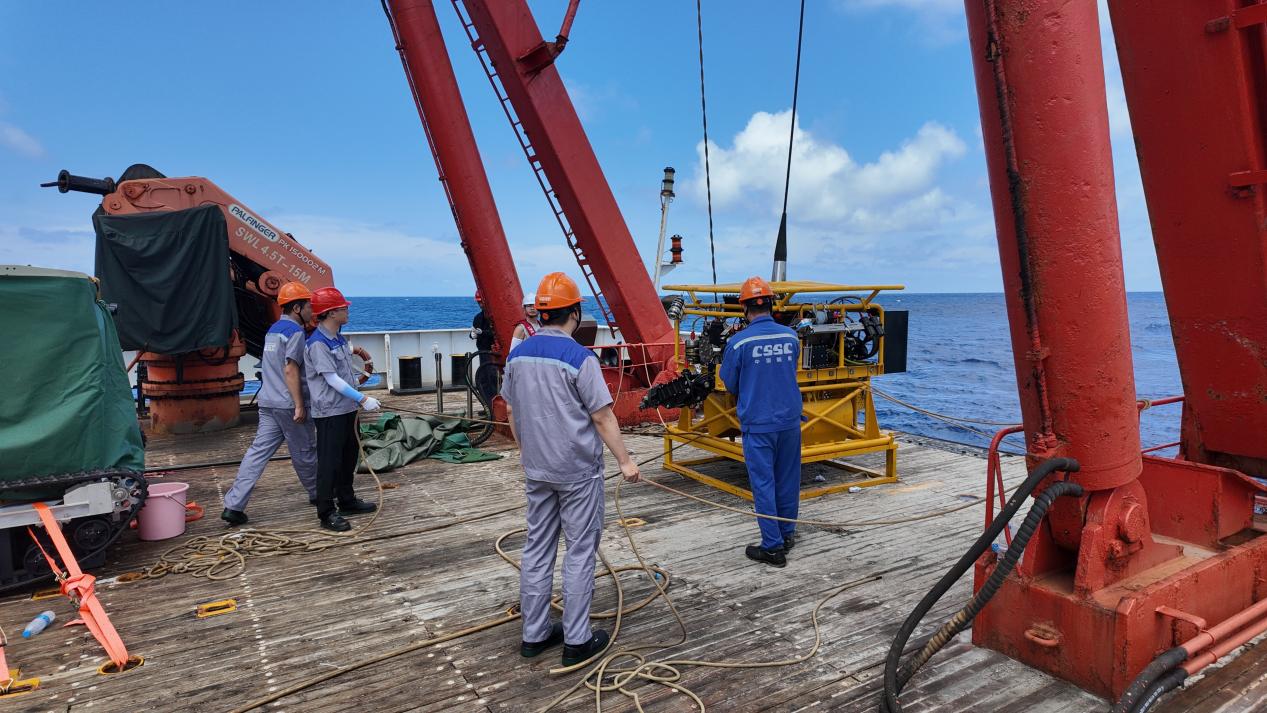
Expedition team members at work aboard the research vessel
Song said that investigating such deposits could broaden China’s future resource options and help strengthen industrial supply-chain security However, the work remains at the scientific exploration stage, focused on sampling and analysis.The newly identified field remains hydrothermally active, and its mineral structures are loose and mechanically fragile. Numerous faults and complex geological conditions would pose substantial challenges to mining and could heighten the risk of seabed collapse.
The ecological concerns are equally significant. Hydrothermal vents support specialized animal and microbial communities that depend on these distinctive habitats. Disturbance to these habitats could result in lasting ecological damage.
For these reasons, Song emphasized that the field is not currently suitable for mining.
The team plans to continue monitoring the area, investigate safer and more appropriate approaches to scientific exploration, and further refine its exploration equipment to support future deep-sea research.